A practical example
A new enquiry could create a customer record, notify the right colleague and schedule a follow-up. We also define what happens if one of those steps fails.

Make routine steps happen automatically, without AI where it is not needed.
We connect actions using clear rules: when an event happens, the agreed next steps follow. Examples include reminders, assigning a new enquiry to a colleague or creating a task after a form submission. This does not necessarily require AI.
Discuss a project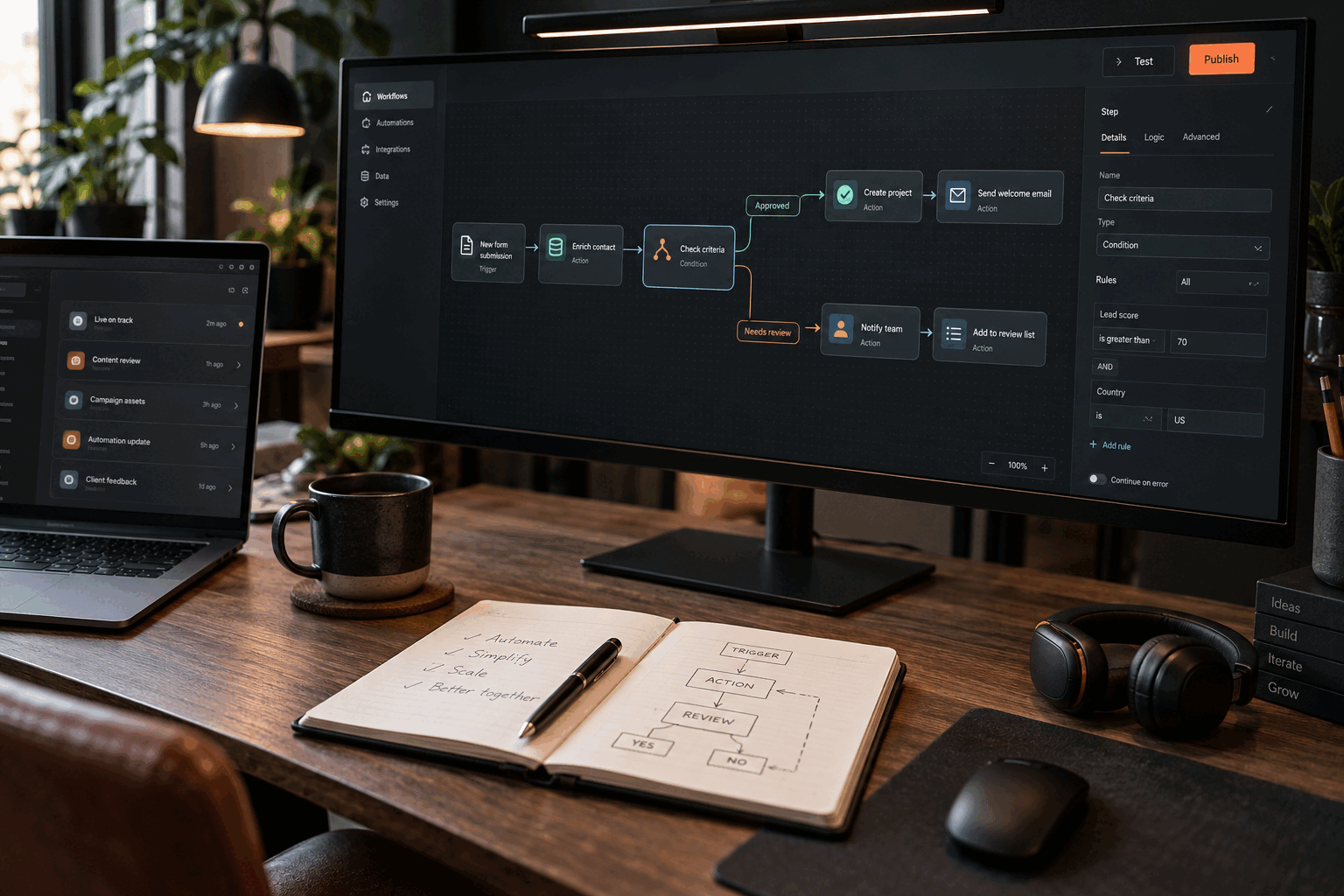
A new enquiry could create a customer record, notify the right colleague and schedule a follow-up. We also define what happens if one of those steps fails.
Useful when the same sequence repeats frequently and the rules are clear. Automation follows agreed rules; exceptions may still need someone to make a decision.
The specific deliverables are confirmed in your project proposal.
We define your audience, priorities and practical requirements before proposing a solution.
Design and development move together, with clear milestones and feedback throughout the work.
We test before launch and agree how support, measurement and future improvements will be handled.
A frequent, well-understood task with reliable inputs is often a good starting point. We compare expected time savings, complexity and the impact of failure before choosing.
After an initial discussion, we define priorities, deliverables, dependencies and approvals. The proposal sets out the scope, stages and fee before work begins.
Yes. We agree roles, system access and communication so responsibilities and coordination are clear.
A description of your goal, the tools you use and the main constraints. You do not need a finished technical specification.
Yes. A workflow can automate routing and reminders while leaving the decision to a person. We define who can approve, what information they receive and what happens if no response arrives.
Where needed, we use identifiers and processing rules to recognise repeated events. Duplicate handling is designed around the business action; retries should not silently create duplicate orders or messages.
We agree the controls and permissions the team needs. A handover can include safe pause procedures, editable business rules and guidance on changes that require a technical review.
Representative inputs, examples of exceptions and access to the people who perform the work. Understanding the current handoffs is more useful than starting with a list of automation tools.